
Specialties at Aegle Therapy
-
Substance Use Concerns
Explore your relationship with substances, find healthier coping strategies, and build a life worth living again.
-
Support for Caregivers & Families
Rediscover your own identity, set healthy boundaries, and learn how to love with limits without losing yourself.
-
Couples Counselling
Rebuild trust, strengthen communication, and navigate challenges that arise around substance use, anxiety, or emotional distance.
-
Mental Health Support
Address anxiety, depression, stress, and life transitions with person-centered therapy that restores balance and self-worth.
Substance Use Concerns
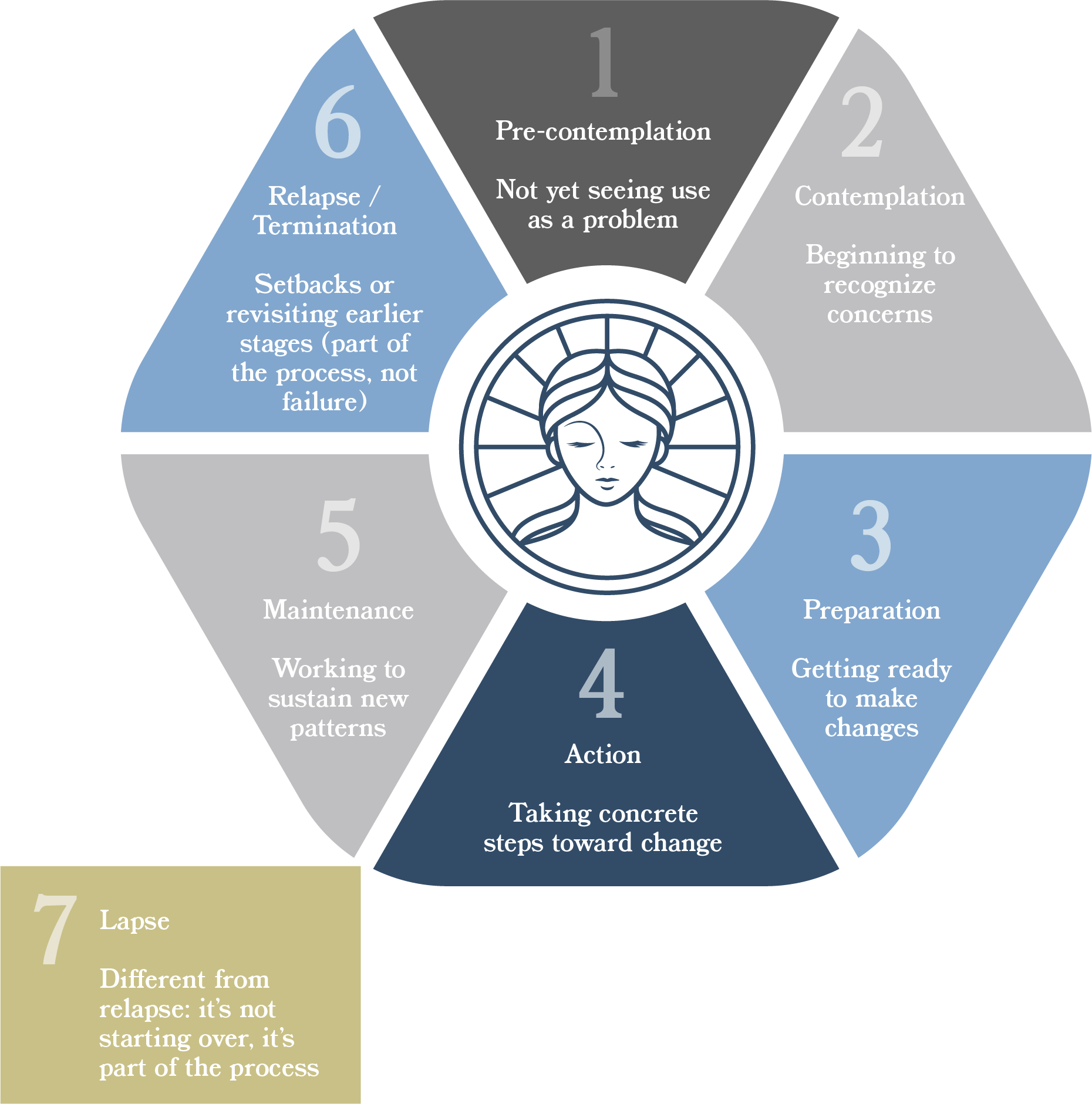
Aegle Stages of Change
At Aegle Therapy, we have extended the traditional model of Six Stages of Change, which are:
Pre-contemplation – not yet seeing use as a problem
Contemplation – beginning to recognize concerns
Preparation – getting ready to make changes
Action – taking concrete steps toward change
Maintenance – working to sustain new patterns
Relapse / Termination – setbacks or revisiting earlier stages (part of the process, not failure)
Based on our expertise, we recognize there’s another important stage — Lapse — that sits just outside of Action and Maintenance. This stage represents those very human moments of struggle, where someone takes a step back but continues forward again. A lapse is different from relapse: it’s not starting over, it’s part of the process of growth.
We recognize that it’s normal for youth to experiment. But substance use can become a concern when it begins to affect daily life, relationships, or mental health. That’s why it’s important to understand the different stages of substance use and to pay close attention to how someone is coping — both physically and emotionally.
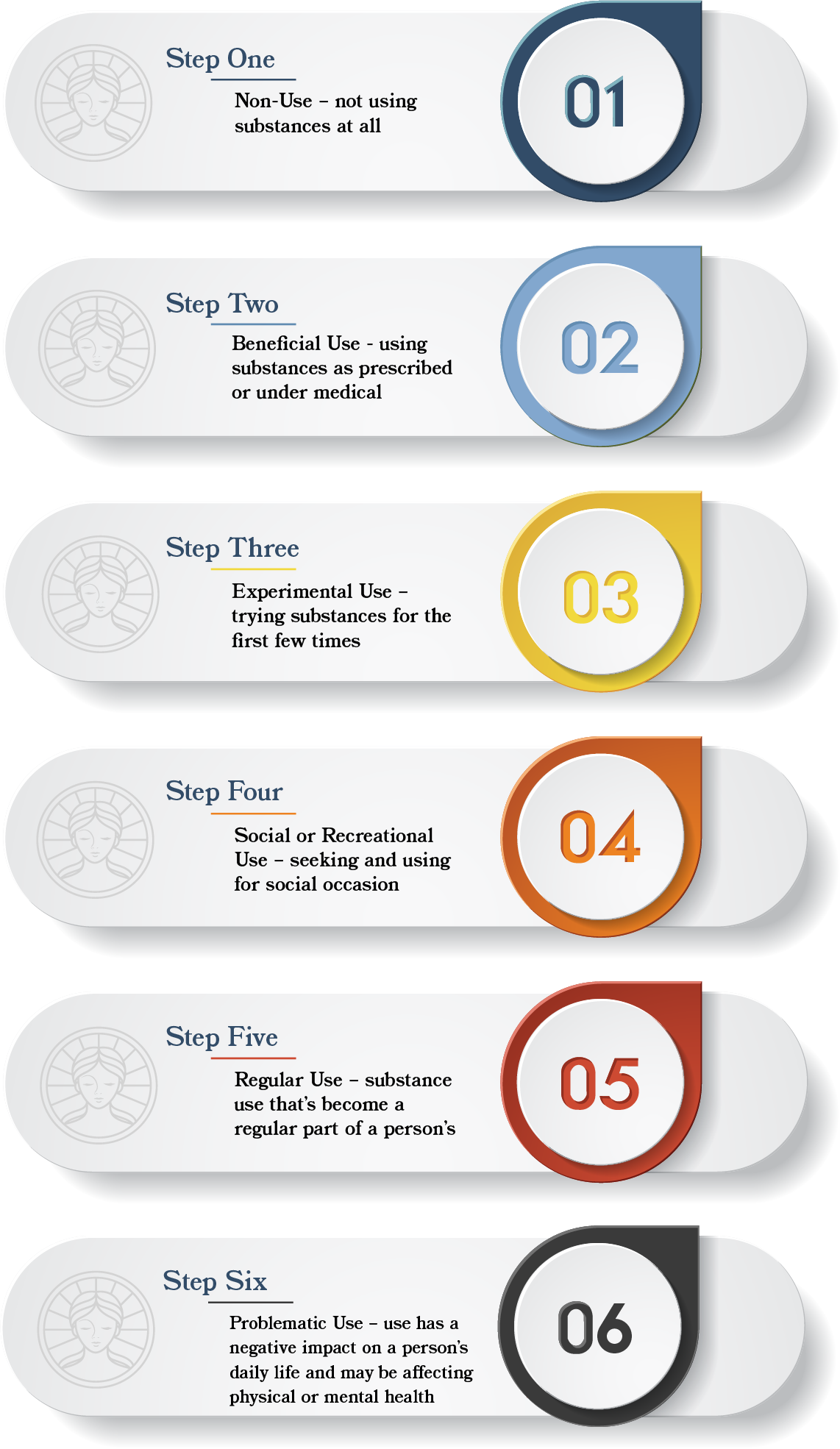
The stages of substance use include:
Non-Use – not using substances at all
Beneficial Use - using substances as prescribed or under medical supervision
Experimental Use – trying substances for the first few times
Social or Recreational Use – seeking and using for social occasion
Regular Use – substance use that’s become a regular part of a person’s life
Problematic Use – use has a negative impact on a person’s daily life and may be affecting physical or mental health
Stages of Substance Use
It can be hard to notice when substance use shifts from social to stressful. Therapy gives you a safe place to explore what’s happening without judgment.
How we help:
Work from a harm reduction approach — your goals set the direction (abstinence, safer use, or medical support)
Use Motivational Interviewing to support progress through the Stages of Change at your own pace
Learn how to navigate lapses without shame, building resilience after setbacks
Apply Cognitive Behavioural Therapy (CBT) to break the cycle of thoughts, feelings, and actions tied to use
Explore past experiences shaping your present patterns
Build a life worth living again — not just less use, but more meaning
Support for Caregivers & Families
When someone you love struggles with substances, it’s easy to lose yourself while trying to help them. Therapy can help you reclaim your own identity and peace of mind.
How we help:
Rediscover who you are outside of your loved one’s use
Learn to love with limits — supporting without self-sacrificing
Build healthier boundaries that protect your well-being
Reconnect with joy, purpose, and self-worth
Create a balanced life where you can care for them and yourself
Couples Counselling
When relationships carry the weight of life’s challenges, it can be hard to stay connected — especially when one partner is navigating substance use, recovery, or the stress of anxiety and depression. Therapy provides a supportive space to rebuild trust, strengthen communication, and restore balance in your relationship.
How we help:
Rebuild trust and emotional safety in your relationship
Improve communication and reduce conflict
Navigate the impact of substance use or mental health concerns on connection and intimacy
Support one another with empathy and clear boundaries
Find balance between individual healing and shared growth
Mental Health Support
Anxiety, depression, stress, or life transitions can make daily living heavy. Everyone’s experience is different, which is why therapy is tailored to you.
How we help:
Address anxiety, depression, stress, and major life transitions
Take a person-centered approach — your story guides the plan
Develop awareness to better tolerate difficult feelings
Learn strategies to ease symptoms and restore balance
Explore values to reduce inner conflict (cognitive dissonance)
Rebuild self-worth so your needs are recognized and honoured

With Our Help You Can Feel
More balanced and steady through ups and downs
FAQs
-
Description text goes here
-
Description text goes here
-
Description text goes here
-
Description text goes here
Book a 15-Minute Complimentary Call
Not sure if therapy is right for you? Let’s connect — schedule a complimentary 15-minute consultation.